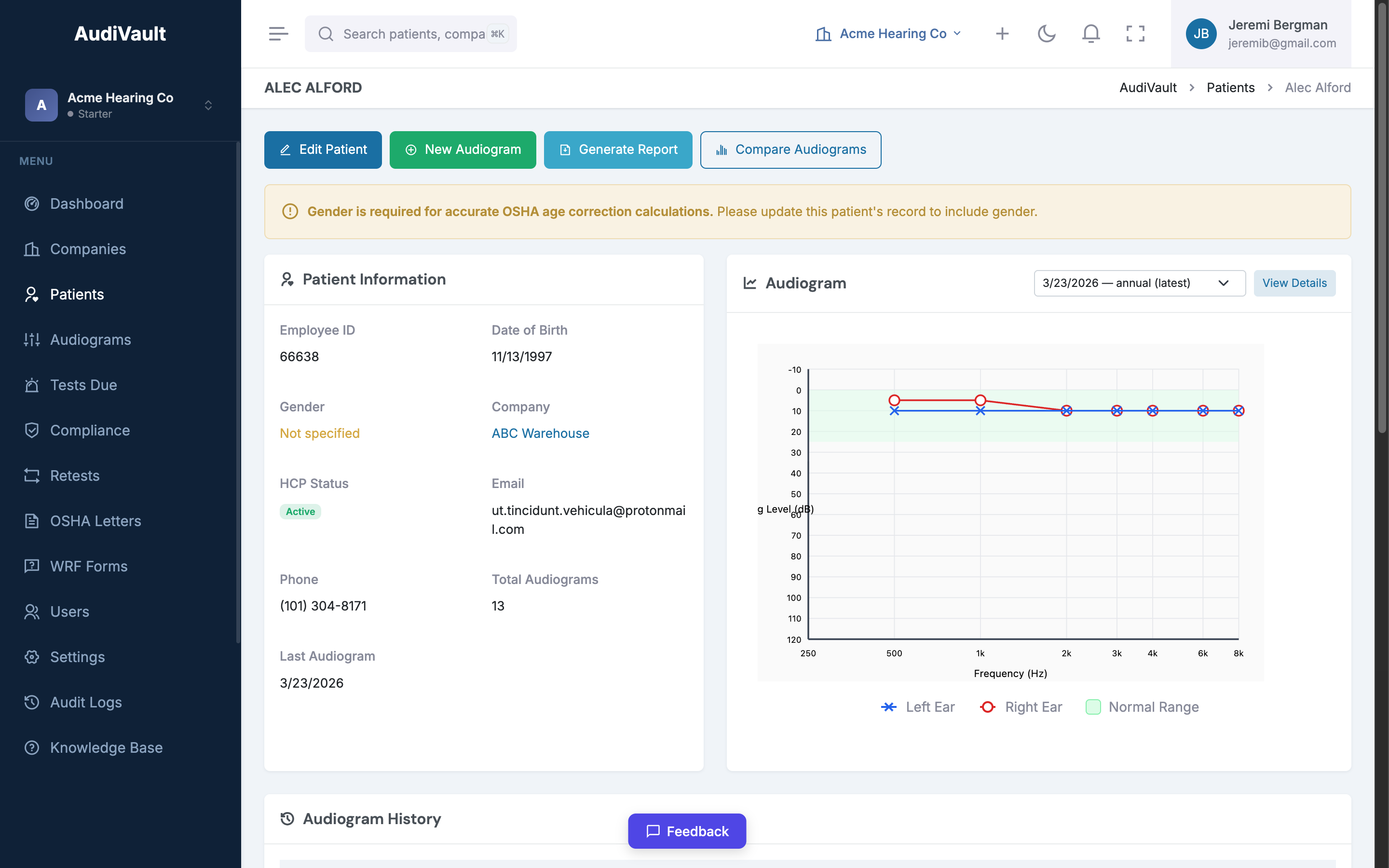
How to Calculate Standard Threshold Shift (STS)
A step-by-step walkthrough of STS calculation with and without age correction, including OSHA recordability determination and common mistakes to avoid.
Expert perspectives on hearing conservation, OSHA compliance, and occupational health technology
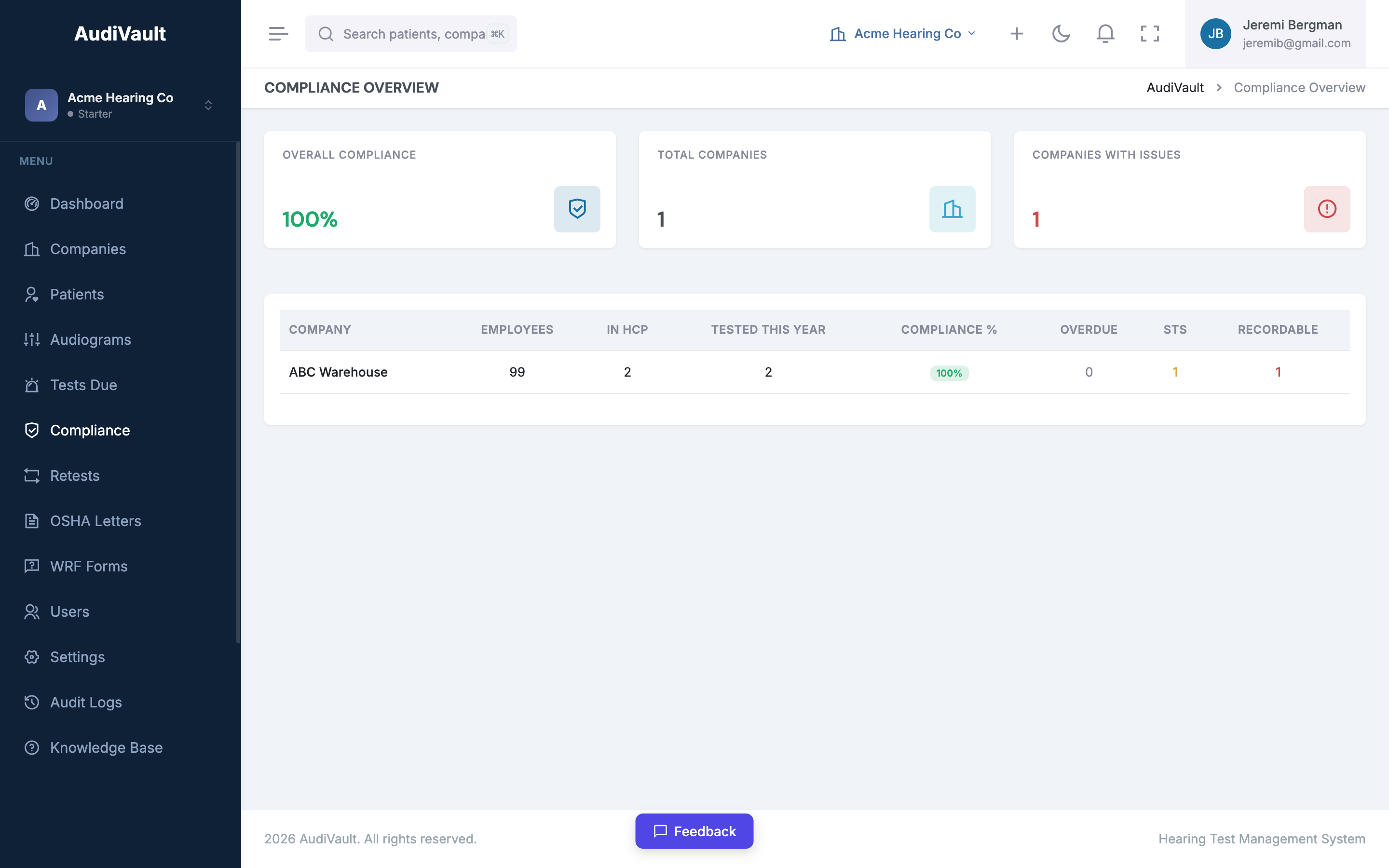
Everything occupational health professionals need to know about OSHA 29 CFR 1910.95 — from noise monitoring and audiometric testing to STS detection, notification requirements, and recordkeeping.
Read article → A step-by-step walkthrough of STS calculation with and without age correction, including OSHA recordability determination and common mistakes to avoid.
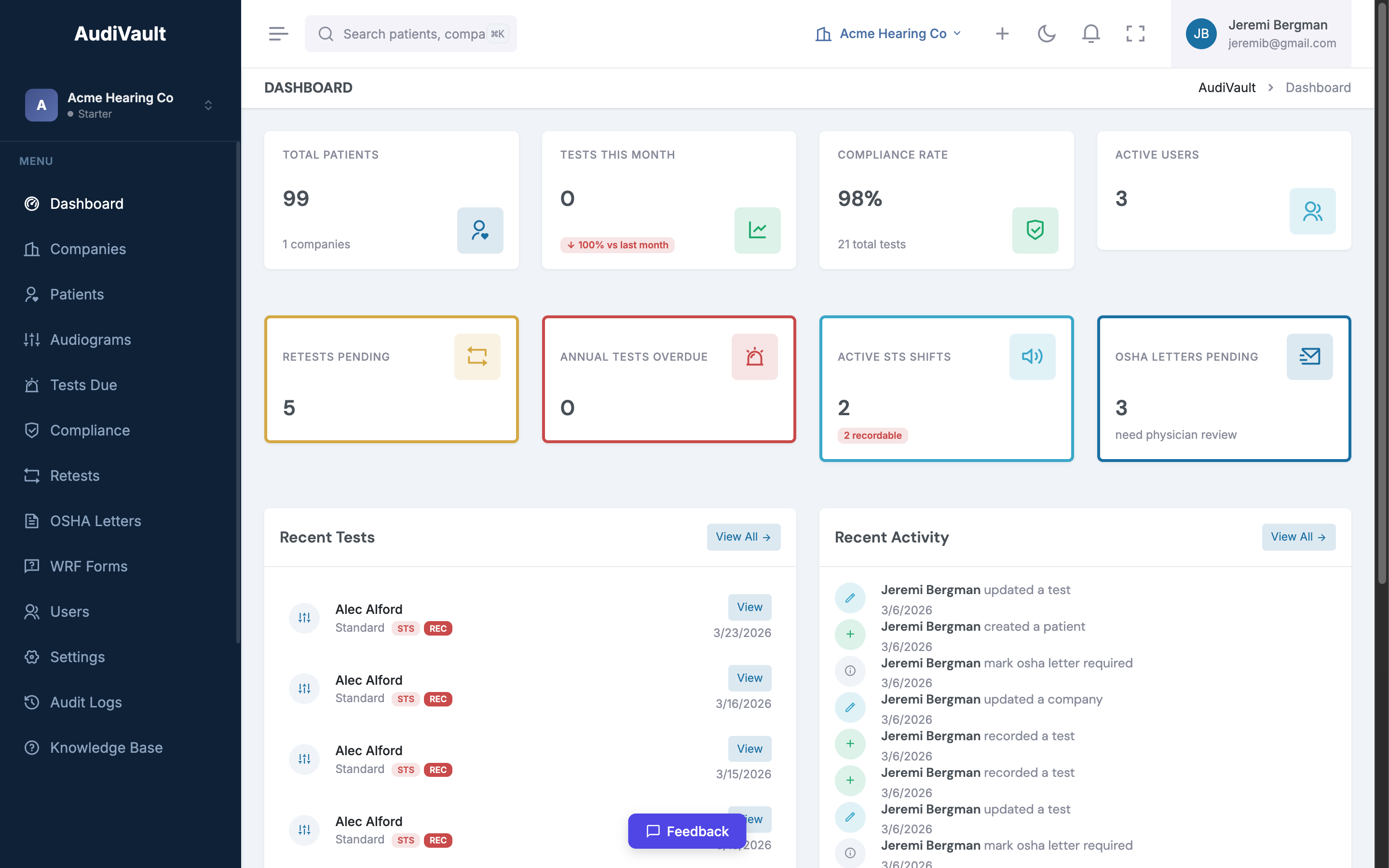
A comparison of cloud-based and desktop hearing conservation software — data security, accessibility, cost, and why modern clinics are making the move.
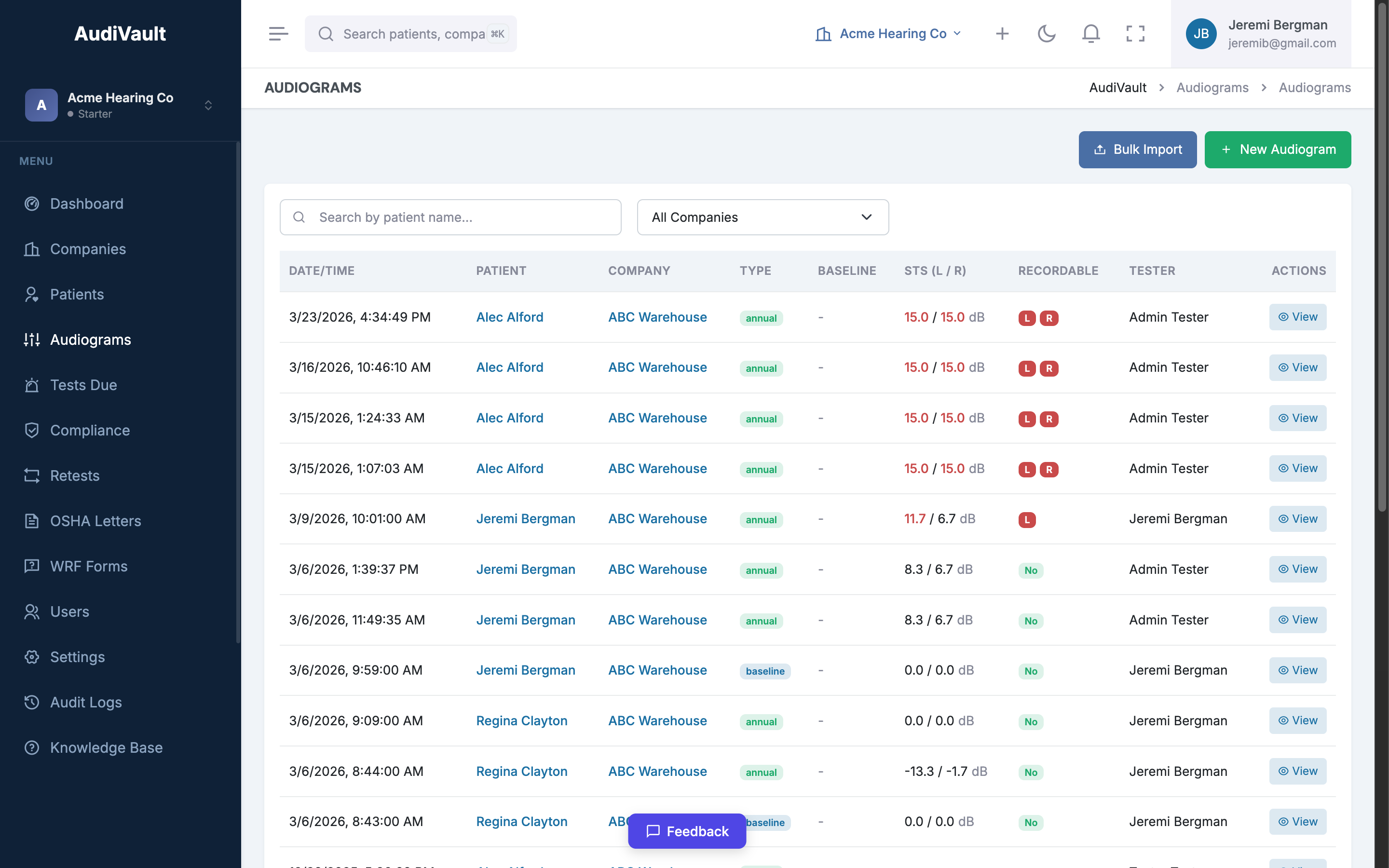
How to obtain valid baseline audiograms, when to revise them, and why baseline quality determines the accuracy of every future hearing test comparison.
Audiometric test results are protected health information under HIPAA. Learn your obligations for storing, transmitting, and sharing hearing test records.